Drains
Drain Cleaning in Greenville, SC
Professional drain clearing for kitchen, bath, and main sewer lines.
Which clog lives where
Not every slow drain is the same problem, and the fix depends on where the blockage sits. In a kitchen sink it is almost always grease and food. Grease goes down hot and liquid, then cools and congeals on the inside of the pipe, catching every scrap that follows it. In a shower or tub the usual culprit is hair bound up with soap scum, lodged at the strainer, the tailpiece or the trap. A toilet that flushes weakly or not at all is a different case again, and wipes, paper towels and hygiene products that do not break down like toilet paper are the common cause.
The line that matters most is the main. When several fixtures slow down together, or the tub gurgles when the washer drains, the blockage is no longer at one sink. It is in the line that carries everything out of the house. Older Upstate homes often have clay or cast iron lines where roots or scale narrow the pipe over the years, and no amount of plunging at a single fixture will touch that.
Tell us what is draining slowly and what else is doing it at the same time. That pattern usually points us to the right spot before we pull a single tool out of the truck. We clear kitchen and bathroom sinks, shower and tub drains, toilet blockages, and main line and sewer cleanouts across Greenville, Spartanburg and Anderson.
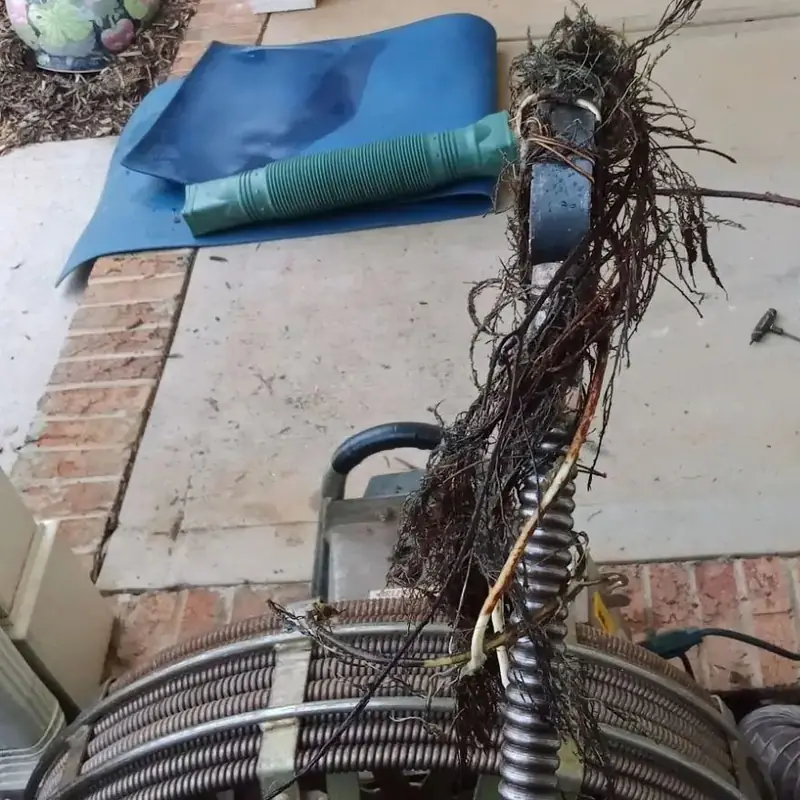
Drain-cleaning cable pulled out of a line, wrapped in tree roots
Electric clearing versus high-pressure jetting
There are two main ways to clear a line, and the right one depends on what is in it. An electric cable machine feeds a spinning, flexible steel cable down the pipe until the cutting head reaches the blockage, then breaks it up or pulls it back out. It is the right tool for a hair clog, a soft stoppage, or roots that have just started to grow into a joint. The photo on this page shows the result of that work: a cable pulled out of a line with tree roots wound around it.
High-pressure water jetting works differently. A hose with a nozzle sends water backward through the pipe at high pressure, scouring the walls clean along with the blockage. Grease and heavy buildup are where jetting earns its place, because a cable can punch a hole through grease and leave the rest of it clinging to the pipe wall to build up again. We use electric and high-pressure cleaning when required, and we choose between them for the line in front of us, not by habit.
If a cable keeps bringing back roots or the same blockage returns, we recommend a camera inspection before clearing it again. Clearing a broken or bellied pipe over and over only buys a few weeks. Seeing the inside of the line tells us whether it needs cleaning, repair, or replacement, and our drain lines page covers how that conversation goes.
BioLine maintainer between cleanings
A professional cleaning resets the line. What you do afterward decides how long it stays clear. A strainer in the kitchen sink catches food scraps. A grease jar on the counter keeps fat out of the pipe in the first place. A hair screen in the shower stops the most common bath clog before it forms. Keep wipes, paper towels and other non-flushables out of the toilet entirely.
For drains that keep coming back, we also offer BioLine Drain Maintainer, a biological drain maintainer used between professional cleanings. Ask the technician how it fits your home or business, and we will recommend a maintenance plan that matches your plumbing, not a one-size product pitch. For some households the answer is that a strainer is all that is needed, and we will say so.
Every drain cleaning comes with a free on-the-spot estimate, and no work starts until you approve it. Our labor is backed by a one-year warranty. If a clog is already backing up into the house, call (864) 436-3006 and ask for same-day service, or request a visit on the contact page and we will get you on the schedule.
“They were very quick to answer and very nice and real good people and did great work.” Tammy Beaman, Google review.